
Laser tattoo removal is a non-surgical treatment that uses targeted laser technology to address unwanted tattoo ink. The laser energy breaks down ink particles into smaller fragments. These fragments are then gradually cleared by the body’s lymphatic system over time.
At Melbourne Laser & Aesthetic Centre (Laser Melbourne), Q-Switched Lasers are used for tattoo removal. The Centre utilises advanced systems, including the Cynosure MedLite C6 and the Quanta Q Plus C. These devices are widely used in clinical practice and have been studied in clinical settings for their application in laser tattoo removal.
Recognised as the industry’s standard device for tattoo removal, the Medlite C6 laser offers four different wavelengths to target even stubborn multi-coloured tattoos. The Q-Switched mechanism is designed to fragment tattoo ink into smaller particles, which are then gradually processed by the body.
The device can be used on a range of skin tones, from lighter to darker complexions.
The Q-Switched is best known for its Photo-acoustic effect, a result of its combination of high power and nanosecond pulse technology that delivers peak energy.
The hallmark of Photo Acoustic technology is high peak power and short pulse duration. When combined, this generates a photomechanical or Photo Acoustic action against the target molecule, whether its collagen, tattoo ink or pigment.
At the heart of the technology is the Q-Switched mechanism. Acting as a high speed shutter, the Q-Switch stores energy between pulses and enables the laser to produce the peak power output. This energy can cause targeted molecules to break apart, while surrounding tissue is left largely unaffected.
Unlike traditional photothermal lasers that primarily rely on heat, Q-Switched lasers use rapid shock waves to create their effect, which is why they are commonly used for treatments such as tattoo removal and pigmentation procedures.
Tattoo ink colours absorb specific wavelengths of the light spectrum. For the treatment to be effective, the Q switch laser must have the absorption spectrum of the individual pigments.
The Quanta Q Plus C has three wavelengths (1064, 532 & 694).
The Q-switched Nd:YAG 1064 nm laser targets dark blue and black inks, while the Q-switched Nd:YAG 532 nm laser targets red, orange, yellow and purple pigments. The Q-switched Ruby 694nm targets the more difficult pigments – bright greens, blues and sky blue tattoos.
The availability of three wavelengths in one system allows practitioners to target a wide range of tattoo colours in a single device.
Call the clinic on 86865786 for a complimentary consultation appointment to enquire about the treatment plan in your case.
An initial consultation with one of the clinicians and cosmetic nurses is necessary to ensure who is a candidate for the treatment. Tattoo removal can be uncomfortable; however, the clinicians at Melbourne Laser & Aesthetic Centre use a chilled air system to constantly cool and numb the surface of the skin throughout the treatment. Additionally, topical anaesthesia may be recommended for those who need it. This can be applied before attending the Centre or in the practice, depending on practitioner guidance.
Treatment times vary depending on the size and complexity of the tattoo. During the procedure, the tattoo may appear frosted white, and some swelling or pinpoint bleeding can occur. An ointment is applied immediately after laser treatment and a non-stick dressing protects the area.
The tattoo area may blister depending on the laser wavelengths used, and crusting can occasionally occur. Healing times vary, but most people recover within a few weeks. Bepanthen ointment is used for 1 to 2 weeks as home care.
Scarring is a potential risk, though it is considered uncommon, and outcomes can depend on the way the tattoo was originally applied. A ghosting effect may result; whereby the tattoo skin appears lighter than the surrounding skin at the completion of the series of laser tattoo removal. This ghosting effect may improve gradually over the following months.
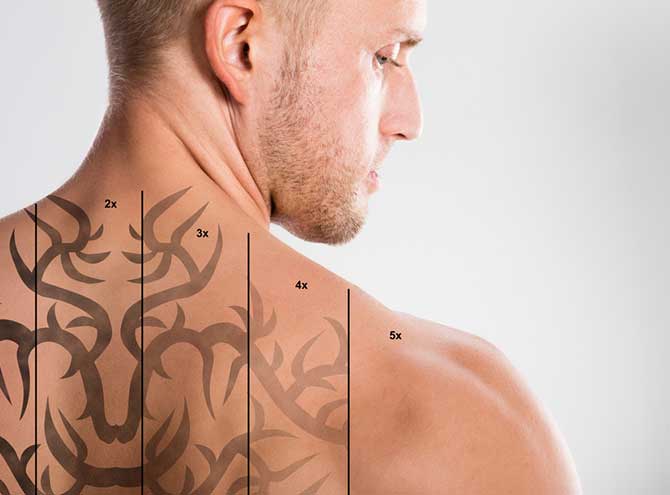
Tattoos can be modified by performing laser tattoo removal on part of the tattoo or it may be faded to accommodate a new tattoo design. The areas of the tattoo to be faded or removed are treated without directly affecting the surrounding tattooed skin that is not being targeted.
A new tattoo can be applied following the fading or removal of the unwanted tattoo.
The dermal clinicians and cosmetic nurses at Melbourne Laser & Aesthetic centre carefully work to strategically remove only the portions of the tattoo that need adjustments.
Following treatment, it is normal to experience temporary skin responses such as redness, swelling, or sensitivity in the treated area. Your practitioner will provide aftercare instructions to help manage these effects. Healing times will vary depending on individual skin type, tattoo size, and placement.
Q-Switched laser delivers short, high-powered pulses of light energy that break the tattoo ink into smaller particles, which are then gradually processed by the body over time.
The number of Q-Switched Laser tattoo removal sessions required depend on the type and colours of ink used. Generally, the number of laser treatments may range from 4 to 12 or more sessions, with complex tattoos requiring more. Amateur tattoos are generally simpler to remove and require less treatments. Professional and multi-coloured tattoos require more complex treatments, using a variety of wavelengths.
The Quanta Q Plus C is a medical-grade Q-Switched laser system that offers three wavelengths, allowing practitioners to treat a wide range of tattoo ink colours. It is commonly used in clinical practice for both tattoo removal and pigmentation procedures.
Complete removal of a tattoo cannot always be guaranteed. How much it can be faded or removed depends on factors like the tattoo’s colour, size, depth of ink, your skin type, and more. Multi-coloured tattoos can be the most persistent and may require more sessions than others.
Fading generally becomes evident after several sessions. However, patience is required as the process takes time.
Suitability depends on factors such as skin type, tattoo colour, tattoo location, and medical history. A personalised consultation is required to determine whether laser tattoo removal is appropriate for you.
You may notice temporary redness, swelling, or changes in skin sensitivity. These effects generally resolve with time, and your practitioner will provide aftercare instructions to help support recovery.
Dark pigments such as black and blue often respond most effectively to laser treatments. Lighter colours, such as green and yellow, may take longer to fade and often require more sessions.


Consultations are FREE. Call 03 8686 5786 to book an appointment with the Centre’s Dermal Clinicians and Cosmetic Nurses.
Tattoo removal costs from $80.00 per Laser Tattoo Removal session. Follow us on Facebook and Instagram to receive up-to-date specials on Laser Tattoo Removal
A comprehensive consultation with a MLAC Senior Dermal Clinician or Cosmetic Registered Nurse allows for proper assessment and treatment plan development. Please call our clinical experts on (03) 8686 5786 for a FREE laser hair removal consultation.


